On December 12, Geely officially announced, through the release of its Global Safety Center, that the Lynk & Co 900 had successfully completed a relative-speed 100 km/h offset car-to-car crash test. The test result demonstrates Geely’s comprehensive safety capabilities and sets a new benchmark for safety performance in the large six-seat SUV segment, reinforcing the growing confidence in Chinese automotive safety engineering.
As the automotive industry enters the second phase of intelligent transformation, safety has become the primary principle and the foundation of user trust. For decades, global automotive safety standards have largely been defined by Europe and the United States. While Chinese brands have achieved strong results under existing test regimes, they have traditionally operated within a framework of benchmarking rather than leading in top-level safety system design and validation.
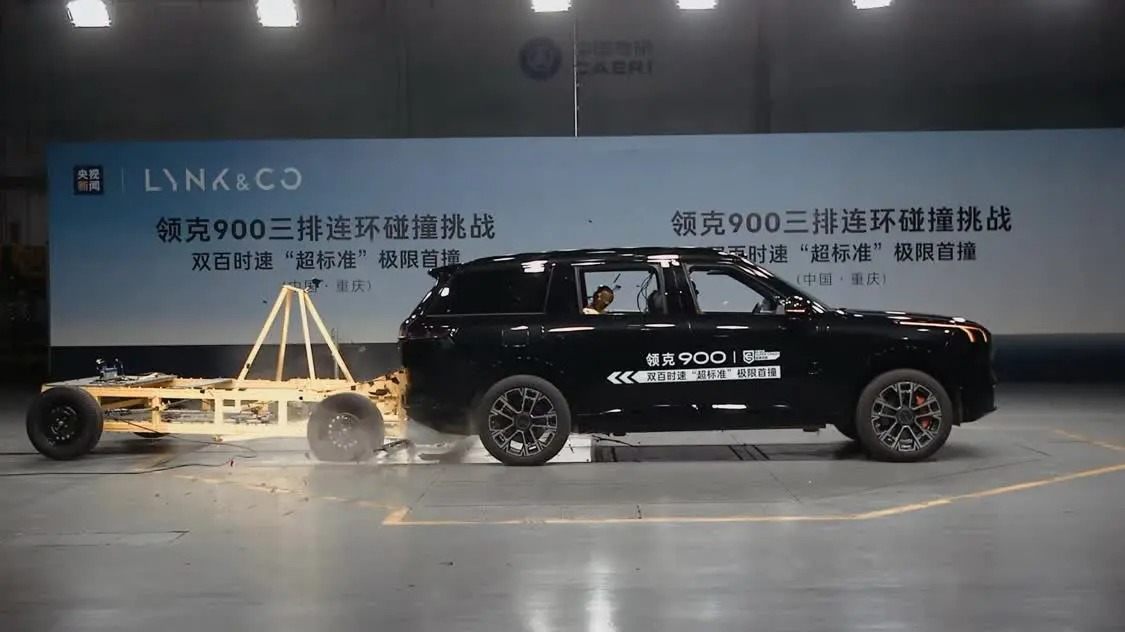
The announcement by the Geely Global Safety Center signals a shift in this long-standing structure. The Center is the world’s largest comprehensive automotive safety laboratory by building area and one of the most capable in terms of testing scope. It holds five Guinness World Records, reflecting Geely’s advanced safety engineering and validation strength.
Notably, upon its announcement, the Geely Global Safety Center was opened to the wider industry. As the infrastructure backbone of Geely’s “All-Domain Safety 2.0” technology system, it will share safety technologies and validation capabilities with industry partners, contributing to higher global automotive safety standards.
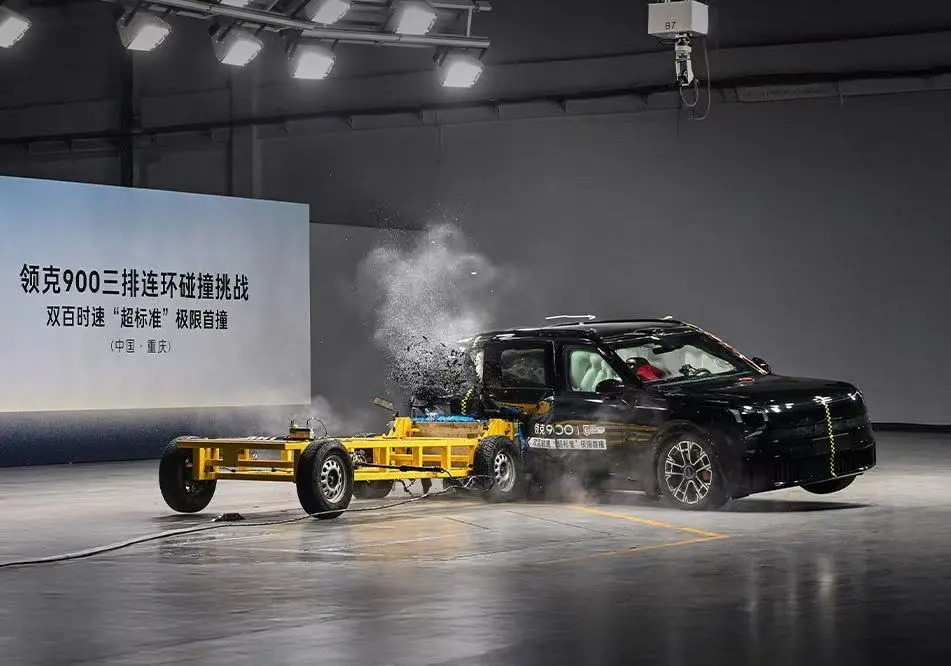
Unlike standardized regulatory crash tests with fixed speeds and barriers, real-world accidents are highly variable. Research shows that head-on collisions between vehicles traveling at different speeds are among the most common and most dangerous accident types, with significantly higher risks of severe injury and fatality.
Based on these real-world scenarios, the Lynk & Co 900 underwent a relative-speed 100 km/h offset car-to-car collision test at the Geely Global Safety Center. Two production-spec Lynk & Co 900 vehicles, equipped with crash test dummies, collided head-on at speeds of 70 km/h and 30 km/h respectively, reaching a combined relative speed of 100 km/h. The test was conducted under live broadcast, marking the first public demonstration of differential-speed car-to-car collision testing.
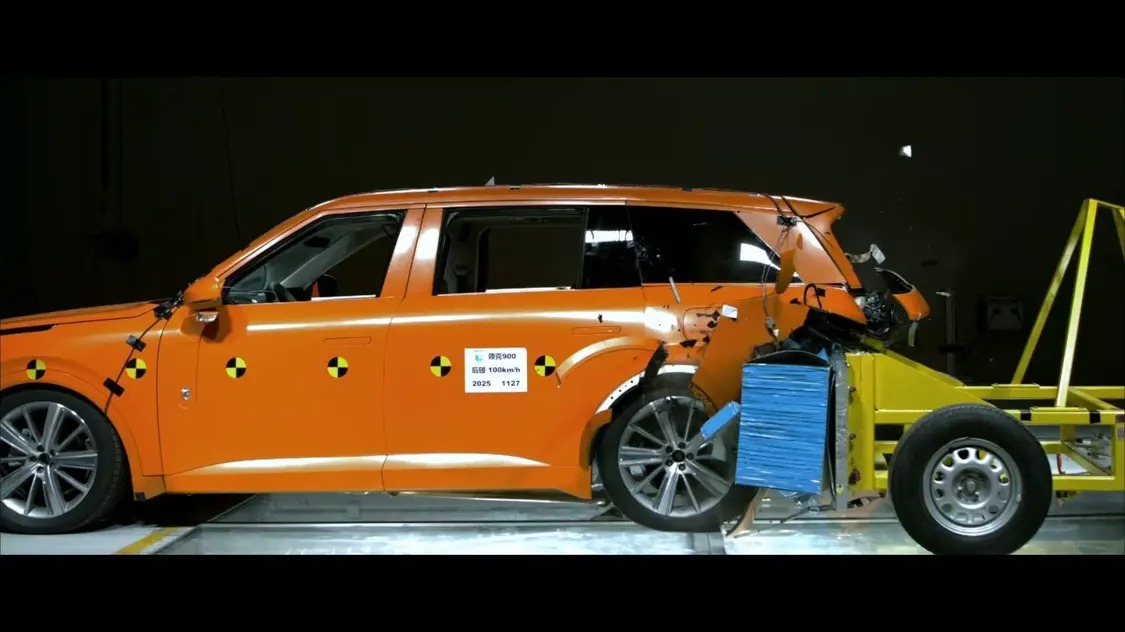
Following the test, the Lynk & Co 900 delivered a comprehensive safety performance: the passenger cell remained intact, all four doors unlocked and opened normally, emergency call systems activated correctly, high-voltage systems shut down safely, airbags deployed as designed, and battery systems showed no leakage, smoke, fire, or explosion. Dummy injury values met all safety thresholds.
Built on the SPA Evo architecture, the Lynk & Co 900 features extensive use of high-strength and ultra-high-strength materials, with hot-formed steel accounting for over 33%, reaching strengths of up to 2000 MPa. Combined with advanced energy management structures and a fully integrated passive and active safety system, the vehicle delivers all-round protection for occupants across frontal, side, and rear impact scenarios.